

Drones in Switzerland: registration, exams and FOCA rules
6 November 2026 · Guide · Rules
Since 1 January 2023, Switzerland has applied the European EASA drone rules – and since December 2024, everything at the Federal Office of Civil Aviation (FOCA) runs through the new dLIS platform instead of UAS.gate. Who has to register? Which exam do I need? What do the classes C0 to C6 mean? This guide sums up the current situation clearly – for hobby pilots as well as companies and emergency services.
Who has to register?
It is not the drones that are registered but the drone operators – the person or organisation that owns the drone. You must register if you fly a drone of 250 g or more, or a drone with a camera or other sensor that can capture personal data – even if it is lighter.
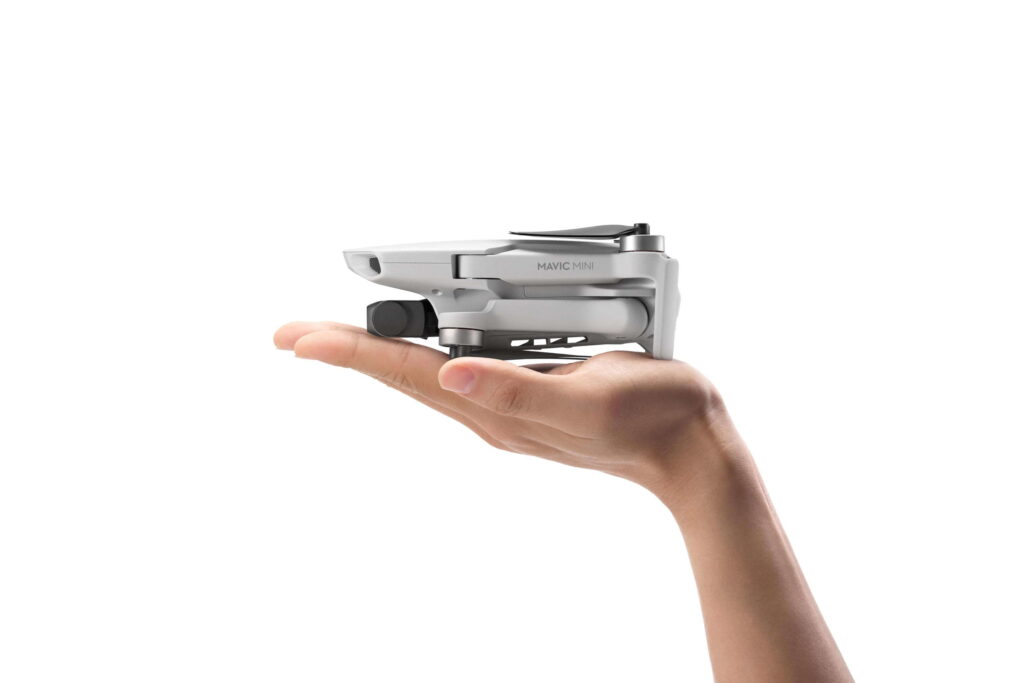
FOCA’s own example: a DJI Mini weighs less than 250 g but has a camera, so its operators must register. Only toy drones under 250 g without a camera are exempt.
Once registered, you receive a UAS operator number in the format CHE + 13 characters. The first part must be clearly visible on every drone – written with a waterproof pen, on a sticker or engraved. The three-character suffix stays secret; you need it to enter the number in the drone’s Remote ID function. Companies and associations register as an organisation; their staff then fly as remote pilots for the organisation.
Step by step: registering on dLIS
dLIS is FOCA’s digital platform for registrations and certificates. Its drone module has been live since December 2024 and has replaced UAS.gate. To log in, you need an eIAM account (AGOV or CH-Login).
- STEP 1
Create an eIAM account
Open an AGOV or CH-Login account. Its personal data forms the basis of your dLIS account.
- STEP 2
Log in to dLIS
Under “Areas”, choose “Drones (UAS)” and click “Register as UAS operator”. Confirm your details and upload your passport or ID.
- STEP 3
Attach the operator number
Once FOCA has checked your application, the number appears in your account. It must be clearly visible on every drone.
- STEP 4
Get your certificate
Depending on the drone class, apply in dLIS for the A1/A3 certificate (online) and, if needed, A2 (on site).
- STEP 5
Take out insurance
From 250 g, liability insurance with a guaranteed sum of at least CHF 1 million is mandatory.
- STEP 6
Check the drone map
Before every flight, check the current flight restrictions on the drone map.
Exams and certificates: A1/A3, A2 and STS
Which certificate you need depends on the subcategory you fly in – and that follows from your drone’s class marking. All certificates are applied for in dLIS and are valid for 5 years in all EASA states.
| Certificate | For | Exam | Fee | Minimum age |
|---|---|---|---|---|
| A1/A3 | Subcategories A1 (C1) and A3 (C2–C4 far from people) | Online theory exam from home, 60 minutes | CHF 20 | 12 years |
| A2 | Subcategory A2: C2 drones close to people | Requires A1/A3 and practical self-study; on-site theory exam in Ittigen (BE), Illnau (ZH) or Lausanne (VD), 60 minutes | CHF 20 | 12 years |
| STS | Specific category, standard scenarios (incl. C5/C6) | Requires A1/A3; on-site theory exam, practical training and test with a recognised entity | CHF 20 | 14 years |
If you fail, you can retake an exam twice; after three attempts the fee is due again. If a certificate expires in less than three months, you can extend it with an online refresher course and an online test. Class C0 drones need no certificate – but FOCA still recommends the A1/A3 training.
Certificates from EASA states (EU, Norway, Iceland, Liechtenstein) are valid in Switzerland – and vice versa. Certificates from other countries are not recognised.
Drone classes C0 to C6 – what does the label mean?
The class marking (C0, C1, C2 …) appears on the drone, the packaging and in the user manual. It determines the subcategory you may fly in. Not to be confused with the CE marking: drones without a CE marking must not be flown.
| Class | Weight | Category | Certificate |
|---|---|---|---|
| C0 | under 250 g | open, A1 (flying over uninvolved people allowed) | none |
| C1 | under 900 g | open, A1 (avoid overflight) | A1/A3 |
| C2 | under 4 kg | open, A2 (close to people) or A3 | A1/A3 + A2 (for A2) |
| C3, C4 | under 25 kg | open, A3 (far from people) | A1/A3 |
| C5, C6 | – | specific category, standard scenario (STS) | A1/A3 + STS |
Drones without a class marking placed on the market before 1 January 2024 (so-called legacy drones) may still fly in the open category – with restrictions: under 250 g in A1, otherwise only in A3 up to 25 kg. Drones without a class marking placed on the market after 1 January 2024 may only be used in the specific category with an authorisation (PDRA or SORA).
The key flight rules of the open category
- Fly no higher than 120 m above ground and always keep the drone in sight (VLOS).
- Never fly over assemblies of people.
- A1: C0 drones may fly over uninvolved people; with C1, overflight must be avoided.
- A2: no overflight of uninvolved people; a horizontal distance of at least 30 m (5 m in low-speed mode) or equal to the flight height.
- A3: at least 150 m from residential, commercial, industrial and recreational areas.
- Always give way to manned aviation; land immediately when emergency services are operating nearby.
- Switch on Remote ID – except for class C0, legacy drones and privately built drones.
- Minimum age 12; younger children only under direct supervision of a person aged at least 16 with the necessary skills.
Drone map, geographical zones and insurance
In Switzerland, there are areas where drone flights are prohibited or only allowed with permission – for example near airfields, in wildlife reserves or near prisons. Pilots must check the applicable restrictions before every flight. For flights in such areas, the authority responsible for the zone grants permission, not FOCA.
From 250 g, liability insurance with a guaranteed sum of at least CHF 1 million is mandatory; FOCA recommends it for lighter drones as well. If you fly for a company, the operator’s insurance is sufficient.
Specific category: when do you need an authorisation?
As soon as the open-category rules cannot be met – for example for flights beyond visual line of sight (BVLOS), over people or with drones over 25 kg – you are flying in the specific category. This requires an operational authorisation from FOCA based on a risk assessment (SORA) or a predefined scenario (PDRA), or you fly under a standard scenario (STS) with a class C5 or C6 drone.
For companies and emergency services, it pays to consider the class when buying: the new DJI Matrice 5T, for example, is designed for EASA classes C2 and C6. trenderia supports you in choosing the right system, with training and mission preparation, right through to the authorisation application.
Flying abroad and as a tourist
Anyone living in the EU, Norway or Iceland registers in their country of residence and does not need to register again in Switzerland. Conversely, Swiss registration via dLIS is also valid in the EU, Liechtenstein, Norway and Iceland – wherever no authorisation is required. Minimum ages can differ from country to country.
Status: 6 November 2026. This article is not legal advice; the information published by the Federal Office of Civil Aviation (FOCA) is authoritative.
Frequently asked questions about drones in Switzerland
Do I have to register my drone in Switzerland?
What is dLIS?
How much does the drone exam cost in Switzerland?
Do I need a licence for a drone under 250 g?
How high can I fly a drone?
Drones for professional use
Want to use drones in your company, fire service or surveying team? trenderia advises you on systems, certificates and authorisations – in person in our showroom in Port near Biel.