

DJI Matrice 4T for fawn rescue
19 November 2026 · Guide · Fawn rescue
Every spring in Switzerland, hundreds of volunteers fly over meadows at dawn to save roe deer fawns from the mower. In 2026, according to Rehkitzrettung Schweiz, around 800 teams brought 7,590 fawns to safety – more than ever before. The DJI Matrice 4T is a drone that is very well suited to the job. We show what it offers, how high you should fly and where its limits lie.
Why the Matrice 4T suits fawn rescue
- Thermal camera with 640 × 512 pixels and a fast f/1.0 aperture: at dawn, fawns stand out clearly against the cool grass.
- Three cameras with 48 MP each and up to 112× hybrid zoom: suspected finds can be checked from search height without descending.
- Up to 49 minutes of flight time (no wind) – enough for several meadows per battery.
- Compact and light at 1,219 g: fits in a backpack and is ready to take off in a few minutes.
- EASA class C2: can be flown in the open category (A2 or A3).
The thermal camera in detail
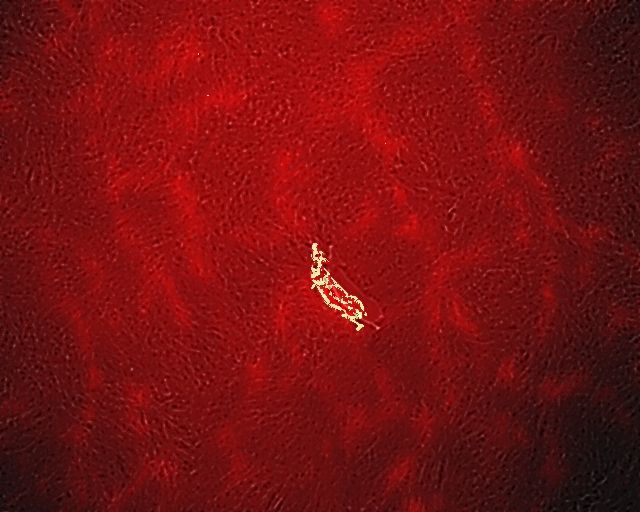
The heart of the search is the uncooled thermal camera (VOx) with 640 × 512 pixels, a 12 µm pixel pitch and an f/1.0 aperture. Thermal sensitivity is ≤ 50 mK. That is enough to detect a fawn’s body heat even through loose grass, as long as the ground is still cool.
With Super Resolution, the Matrice 4T upscales the thermal image to 1280 × 1024 pixels. The image looks steadier and more detailed on screen, but the sensor’s physical resolution remains 640 × 512. That is why we use the native value when choosing the flight height.
High-contrast palettes such as ‘White Hot’ or ‘Black Hot’ work well for searching; ten palettes are available in total. The thermal image can be magnified digitally up to 28×.
How high should you fly?
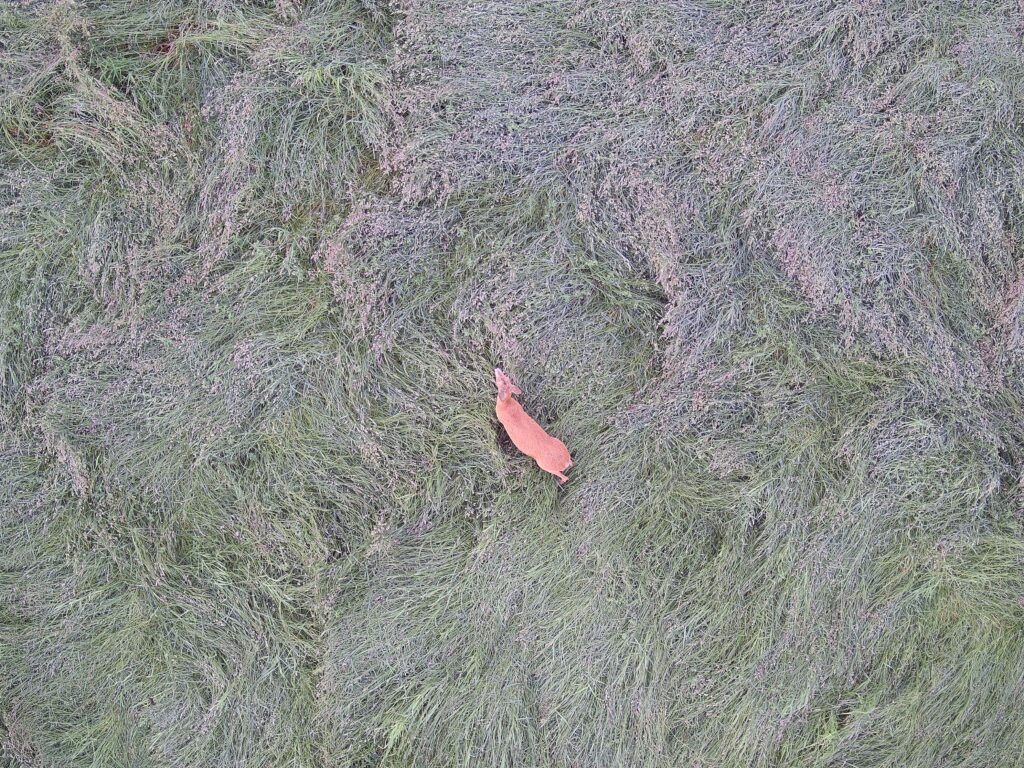
The higher the drone flies, the wider the strip the thermal camera covers on each pass – and the fewer pixels remain for a single fawn. A ground resolution of around 7 cm per pixel is a useful guide for fawn searches (research by Martin Israel, cited by the German drone pilots’ association BVCP). DJI’s specifications give the following for the Matrice 4T:
| Flight height | Strip width on the ground | Thermal ground resolution |
|---|---|---|
| 40 m | approx. 26 m | approx. 4.0 cm/pixel |
| 50 m | approx. 32 m | approx. 5.1 cm/pixel |
| 60 m | approx. 39 m | approx. 6.1 cm/pixel |
| 70 m | approx. 45 m | approx. 7.1 cm/pixel |
Calculated values for flat terrain with the camera pointing straight down (45° diagonal field of view, 5:4 aspect ratio, without Super Resolution). Field reports usually mention flight heights of around 50 to 60 m. In tall, dense grass, along forest edges or on slopes it pays to fly lower and space the passes more tightly. The guidelines from your training with Rehkitzrettung Schweiz take precedence.
Checking a find without descending
Not every warm spot is a fawn. Molehills, stones, cowpats or resting places of game can look similar in the thermal image – especially once the sun has warmed the ground. This is where the Matrice 4T’s cameras come in: wide (24 mm), medium tele (70 mm) and tele (168 mm), each with 48 MP, plus up to 112× hybrid zoom.
With the thermal and zoom views side by side in DJI Pilot 2, you can check a find directly from search height. This saves time and battery and keeps the drone well above the animal. The laser rangefinder (up to 1,800 m) also helps to pinpoint the location and guide the helpers on the ground.
A rescue morning with the Matrice 4T
- The day before: agree the mowing date with the farmer and the gamekeeper, set up the fields as a flight mission in DJI Pilot 2 or import them as KML, and check FOCA’s drone map.
- Start early: thermal contrast is greatest while the ground is still cool from the night.
- Fly systematically: parallel passes with slight overlap, constant height and a steady pace. One person flies, a second watches the thermal image.
- Check suspected finds with the zoom and guide the helpers by radio or phone.
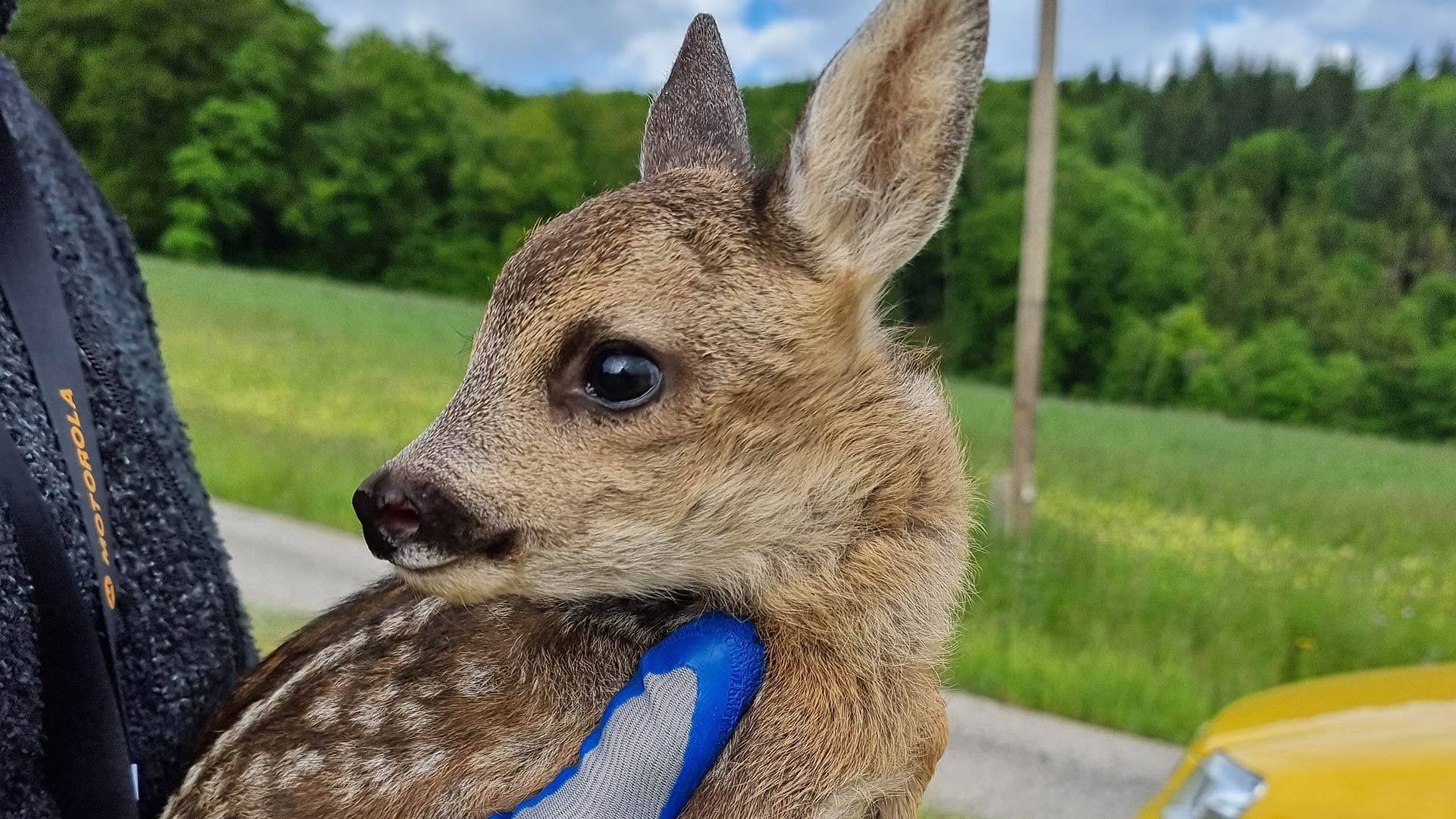
- Secure the fawn: pick it up with gloves and tufts of grass so that no human scent remains, and carry it to the shady edge of the meadow.
- Release it after mowing – the doe will come back for her fawn.
What to bear in mind
- No IP rating: the Matrice 4T has no protection rating against water. Take off and land on a landing pad rather than in wet grass; in rain it stays on the ground.
- Plan flight time realistically: the 49 minutes apply with no wind down to 0% battery. Expect considerably less and keep a reserve.
- Batteries: charging takes place at 5–40 °C; the battery does not support low-temperature charging. For a full rescue morning we recommend at least three to four batteries and a way to charge in the vehicle.
- Time window: as soon as the sun warms the ground, the contrast disappears. Spread large areas across several teams or mornings.
- Rules: as a C2 drone, the Matrice 4T flies in the open category in A3 (A1/A3 certificate, at least 150 m from residential, commercial, industrial and recreational areas) or in A2 (with an additional A2 certificate). Find out more in our article Drones in Switzerland: FOCA rules.
The Matrice 4T in figures
| Feature | Matrice 4T |
|---|---|
| Thermal camera | 640 × 512 pixels (Super Resolution 1280 × 1024), f/1.0, ≤ 50 mK |
| Thermal zoom | up to 28× digital |
| Cameras | Wide 24 mm, medium tele 70 mm, tele 168 mm, 48 MP each |
| Hybrid zoom | up to 112× |
| Laser rangefinder | up to 1,800 m |
| Flight time (no wind) | up to 49 min, hovering up to 42 min |
| Weight | 1,219 g |
| Operating temperature | −10 to 40 °C |
| Ingress protection | no IP rating |
| Transmission range (CE) | up to 12 km without obstacles or interference |
| EASA class | C2 |
Source: DJI Enterprise technical specifications.
And the new Matrice 5T?
Since November 2026, the DJI Matrice 5T has offered a larger platform with native 1280 × 1024 thermal imaging, IP55 and up to 59 minutes of flight time. For fawn rescue, that mainly means more area per morning. We explain what that means in practice in the article DJI Matrice 5T for fawn rescue. You will find all the differences in detail in our comparison DJI Matrice 5T vs Matrice 4T.
For many volunteer teams, the Matrice 4T remains the sensible choice: light, compact, quick to deploy – and with thermal imaging that is well up to the job of finding fawns.
FAQs on the Matrice 4T for fawn rescue
Is the DJI Matrice 4T suitable for fawn rescue?
At what height do you search for fawns with the Matrice 4T?
What does Super Resolution offer when searching for fawns?
Can I use the Matrice 4T in dew or rain?
A Matrice 4T for your fawn rescue team
We advise fawn rescue teams, hunting associations and municipalities on the drone, batteries, accessories and set-up, and hand over the Matrice 4T ready for use. You can also rent systems for the season.