

Fawn rescue: Roland Stäuble’s fawn photo wins 3rd place
4 November 2026 · Fawn rescue
trenderia supports Rehkitzrettung Schweiz, the Swiss fawn rescue association: we are a sponsor of its photo competition and donated the prize for 3rd place – a DJI Matrice 4 battery. The winner is Roland Stäuble, with a picture that captures what fawn rescue is all about: a young fawn hidden in the grass. Congratulations!
The winning photo
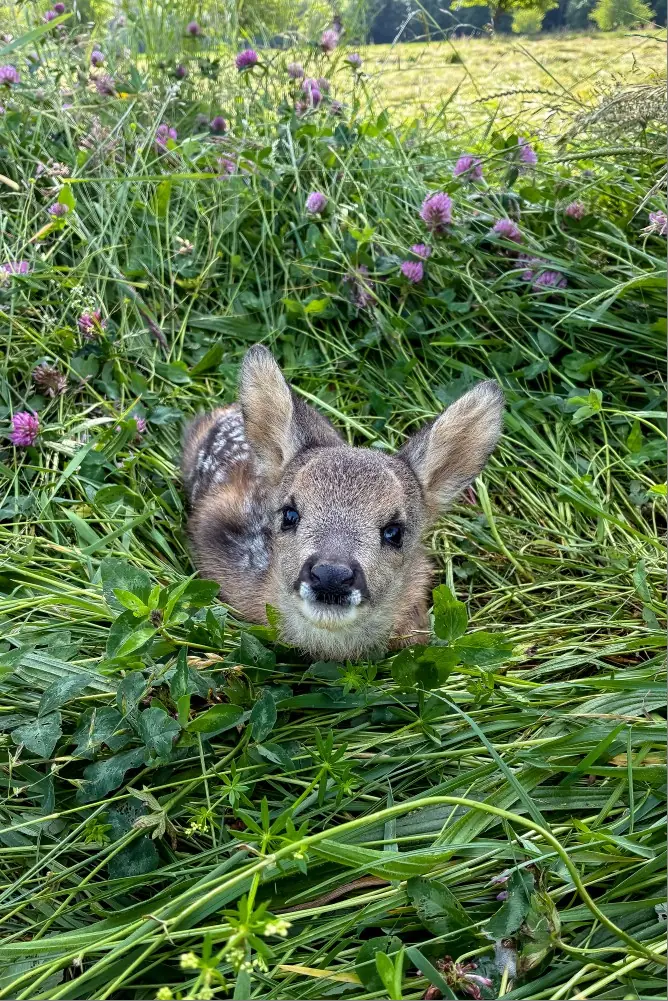
The picture shows a fawn pressed into the grass, looking into the camera with big eyes. This is exactly how fawns lie in the meadows during their first weeks: still, well camouflaged and almost impossible to spot with the naked eye.
Roland Stäuble is a keen amateur photographer, which makes the award all the more special for him: “As a passionate hobby photographer, a placing like this is of course a particularly lovely recognition.”
Our contribution as a sponsor
As a sponsor, trenderia donated the prize for 3rd place: a DJI Matrice 4 battery. We want to make the work of Rehkitzrettung Schweiz more visible and give something back to the volunteers who head out for the fawns every spring.
An extra battery is valuable in fawn rescue: searches take place early in the morning, while the ground is still cool and fawns stand out clearly in the thermal image. That window is short – every minute of flight time counts.
Many thanks to Rehkitzrettung Schweiz and Bruno Holliger, head of Research & Technology, for organising the competition.
Why fawn rescue matters
In May and June, the mowing season coincides with the time roe deer give birth. The doe leaves her fawn in the tall grass. When danger approaches, the fawn does not flee but stays motionless – a fatal instinct in front of a mower.
Wildtier Schweiz estimates that around 10,000 fawns are killed by mowing machines in Switzerland every year. A systematic search before mowing can prevent a large share of these deaths.
How fawn rescue with drones works
- The farmer reports the mowing date to the rescue team in good time.
- On the morning of mowing, the drone with a thermal camera flies over the meadow systematically before the sun warms the ground.
- Helpers walk to the heat signatures, pick up the fawn with gloves and tufts of grass so that no human scent is left, and carry it to the shady edge of the meadow.
- After mowing, the fawn is released. The doe comes back for it.
Rehkitzrettung Schweiz – powered by volunteers
The Rehkitzrettung Schweiz association grew out of a research project at the Bern University of Applied Sciences (HAFL). Several hundred volunteer drone pilots head out for the fawns every spring.
We are happy to support this commitment – with expertise in thermal drones and with prizes like this battery.
Drones for fawn rescue
Planning a fawn rescue or looking to equip your team? trenderia advises you on suitable DJI Enterprise drones with thermal cameras, accessories and training. You can also rent systems for the season.